- Servertools /
- Intel® Data Center Solutions for HCI
IT infrastructures are no longer considered just business-supporting cost centers. They have become critical, business-driving profit centers that fuel innovation, differentiation, competitive insights, and new possibilities. To get there, IT is moving away from single-purpose, siloed infrastructure to modern, cloud architectures that are self-monitoring, self-optimizing, and self-healing.
An easy way to think about an HCI platform is a “Cloud in a Box.” In other words, an HCI platform has everything you need in a modern cloud in a server—processing, memory, storage, networking, as well as software virtualization, automation, and orchestration—that can be easily scaled horizontally across multiple HCI platforms.
That makes it easier to realize the cloud agility, economics, scalability, and innovation that leading organizations crave.
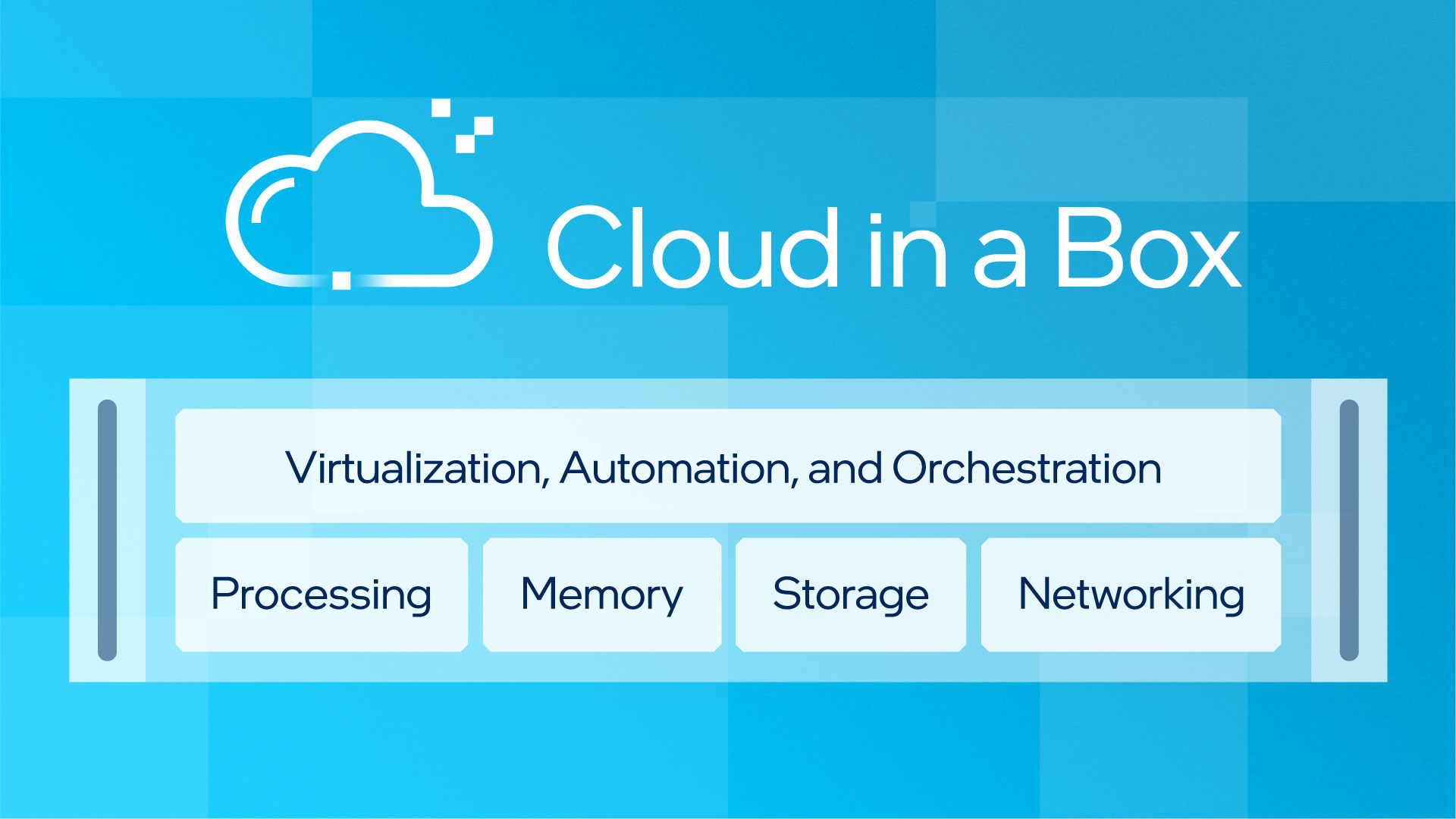


In today's disrupt or be disrupted world, organizations must make IT modernization, and its ability to drive innovation, a top priority. HCI not only enables organizations to tap into a data center with greater agility and cost efficiency—it enables them to move more easily to a hybrid or multicloud strategy and leapfrog their competition. That is a big reason why HCI deployments are growing exponentially.
adopted1
in next year1
2 Source – Technology Business Research, Inc. https://tbri.com/research/hyperconverged-platforms-customer-research/


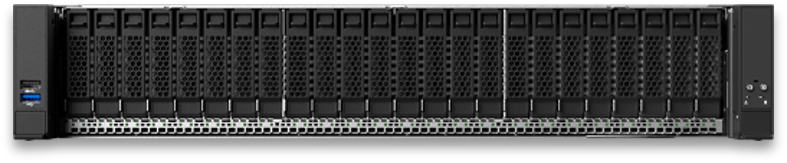
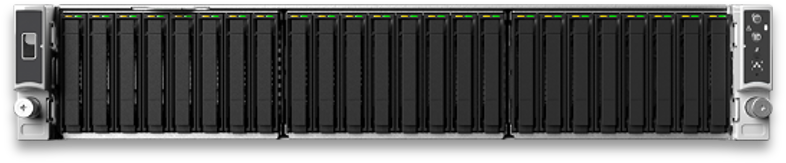

|
Outstanding performance and capacity for HCI and mainstream application needs in a 1U or 2U form factor. Advanced, next-gen security innovations to help better protect data, workloads, and platforms. |
Previous-gen platform for HCI and mainstream application needs. |
|
|
Certified solutions available for these Intel® Server System Families

Microsoft Azure Stack HCI

Nutanix Enterprise Cloud

VMware vSAN
|
|||
|
Certified solutions available for:
Microsoft Azure Stack HCI
Nutanix Enterprise Cloud
VMware vSAN
|
Certified solutions available for:
Microsoft Azure Stack HCI
Nutanix Enterprise Cloud
VMware vSAN
|
||
|
Processor Generation |

3rd Gen Intel® Xeon® Scalable processor
|

2nd Gen Intel® Xeon® Scalable processor
|
|
|
Processor Cores per Chassis |

Up to
80 cores
|

Up to
56 cores
|
|
|
Memory Capacity per Chassis |

Up to
12 TB
with Intel® Optane™ persistent memory 200 series
|

Up to
6 TB
with Intel® Optane™ persistent memory
|
|
|
Storage Drives per Chassis |

Up to
24 drive bays
|
Up to
24 drive bays
|
|
|
I/O Throughput |

16 GT/s
PCIe 4.0
|

8 GT/s
PCIe 3.0
|
|
(Including Foundries)
| 1Q21 Rank | 1Q20 Rank | Company |
|---|---|---|
| 1 | 1 | Intel |
| 2 | 2 | Samsung |
| 3 | 3 | TSMC |
| 4 | 4 | SK Hynix |
| 5 | 5 | Milicron |
Top 25 for 2021

- Purpose-driven organization
- Customer-driven business transformation
- Digital-first supply chain